Latest Good Practices

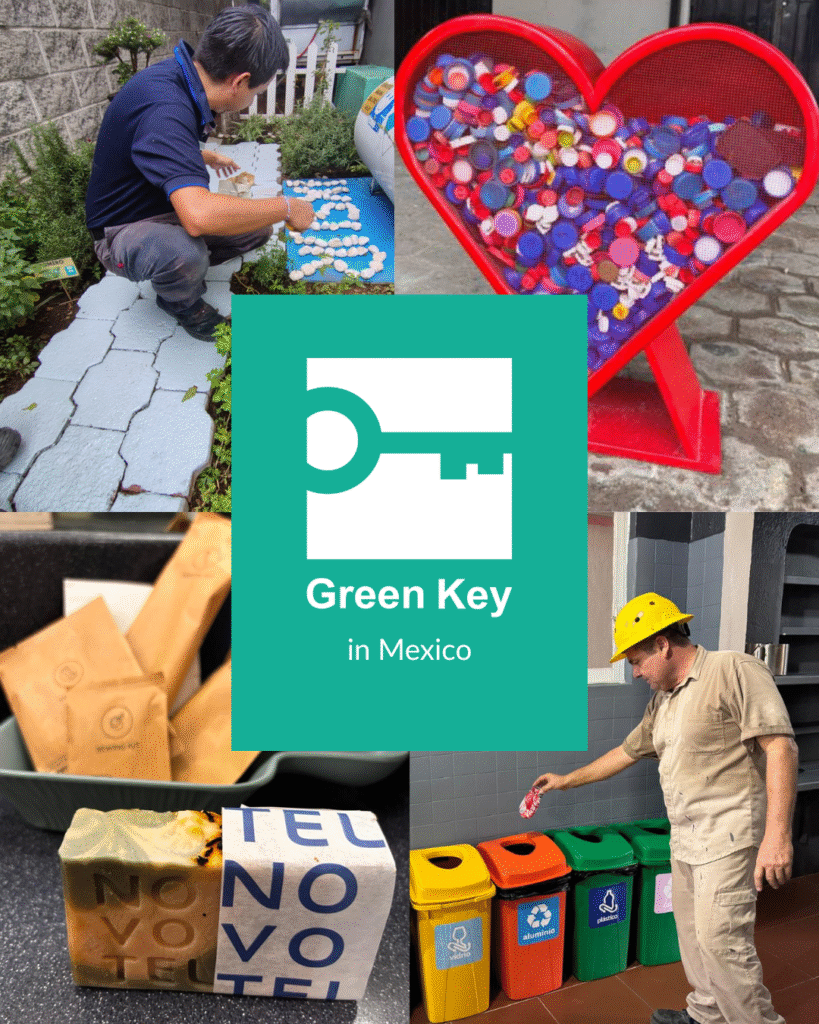
Mexico: Inspiring New Practices in Green Key Certified Hotels

Good practices are thriving in Mexico’s hospitality sector. Six Green Key certified hotels are leading by example, showing that sustainability can take many different forms.  Resource Management: Measurable Progress  At Gamma Tijuana Hotel, high water consumption was identified as a priority. The installation of flow restrictors and the repair of underground leaks produced concrete results. After sustained efforts, water flow was reduced to 3 litres per minute in guestrooms and 5 litres per minute in staff showers. In 2023, water use stood at 402 litres per guest; by 2025, this had dropped to 239 litres per guest.  Grand Fiesta Americana Hotel implemented a programme to strengthen energy-saving measures. Daily inspections of electrical and gas equipment, the installation of motion detectors and automatic switches, and the renewal of older systems all contributed to measurable savings: a 6% reduction in electricity use and an 8% reduction in gas consumption.  Both hotels have achieved significant results and remain committed to advancing their sustainability work.    Circular Economy: Practical Solutions from the Garden  At One Ciudad de México Periférico Sur Hotel, a compact aromatic garden was created to supply the kitchen. Despite limited space, the team designed an efficient  layout and now grows parsley, thyme and other herbs, ensuring a steady supply and adding freshness to their dishes.  W Punta de Mita Hotel also focused on its gardens, developing organic fruit and vegetable production for the restaurant. By avoiding pesticides and synthetic chemicals, the hotel produces seasonal food on site. Kitchen waste is also used as compost, supporting a closed-loop system.    The Power of Waste: Reuse and Recycling  At Novotel Monterrey Valle, liquid soap dispensers were replaced with bar soap. The new bars were created using surplus tea, which would otherwise have gone to waste. Guests at Gold level and above now enjoy a complete “tea experience”, from cup to handwash. This creative solution reduces waste while enhancing the guest experience.  At Hotel Thompson Zihuatanejo, staff training and the creation of a “green brigade” laid the foundations for better waste management. Clearer signage on bins and the introduction of new collection tools supported the programme and made participation easier for both staff and guests.    A Shared Commitment  These examples demonstrate how good practices can be developed in many different forms, each with a tangible impact on environmental performance.  Green Key International warmly thanks Gamma Tijuana Hotel, Grand Fiesta Americana Hotel, One Ciudad de México Periférico Sur Hotel, W Punta de Mita Hotel, Novotel Monterrey Valle, and Hotel Thompson Zihuatanejo for sharing their initiatives. Special thanks also go to Green Key Mexico for their ongoing work and for supporting the expansion of certifications across the country.   Would you like to share a Good Practice from your hotel? Please fill out the form, we will be more than happy to read it, share it and inspire the network

Mexico: Inspiring New Practices in Green Key Certified Hotels Read More »
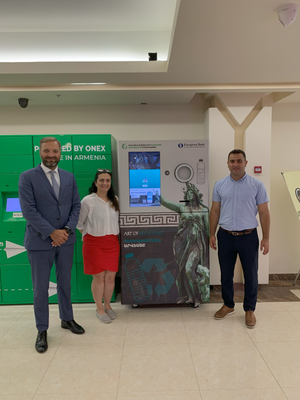
“Waste Reward System”, Armenia’s innovative recycling model

Alongside its role as the Green Key National Operator in Armenia, ISSD (Institute for Sustainable Solutions Development) continues to pioneer innovative sustainability initiatives across the country.  ‘Recycle it’, a project that began nearly seven years ago, had a simple mission: to develop waste sorting and make it part of everyday life while promoting good waste management practices. Building on this success, ISSD has recently launched an inspiring new initiative: the ‘Waste Reward System’. The programme is Armenia’s first non-monetary deposit return model.  With support from the European Bank for Reconstruction and Development (EBRD), ISSD installed the country’s first smart reverse vending machine, integrated with the PlastiX mobile application.   The concept   This simple system not only promotes recycling but also strengthens a culture of sustainability while supporting eco-conscious companies.  The vending machine is accessible to both local residents and international visitors, including guests of Green Key certified establishments in Armenia. By reducing waste, incentivising recycling, and inspiring responsible business practices, ISSD demonstrates that sustainability can take many creative forms and bring long-lasting environmental change.     About Innovative Solutions for Sustainable Development of Communities   Innovative Solutions for Sustainable Development of Communities (ISSD) is a non-profit, non-governmental Armenian organization whose main goal is to promote sustainable development through innovative projects in waste management, agriculture, education, circular economy, business, and women empowerment.    Has this Good Practice inspired you? Read more on this page. 

“Waste Reward System”, Armenia’s innovative recycling model Read More »

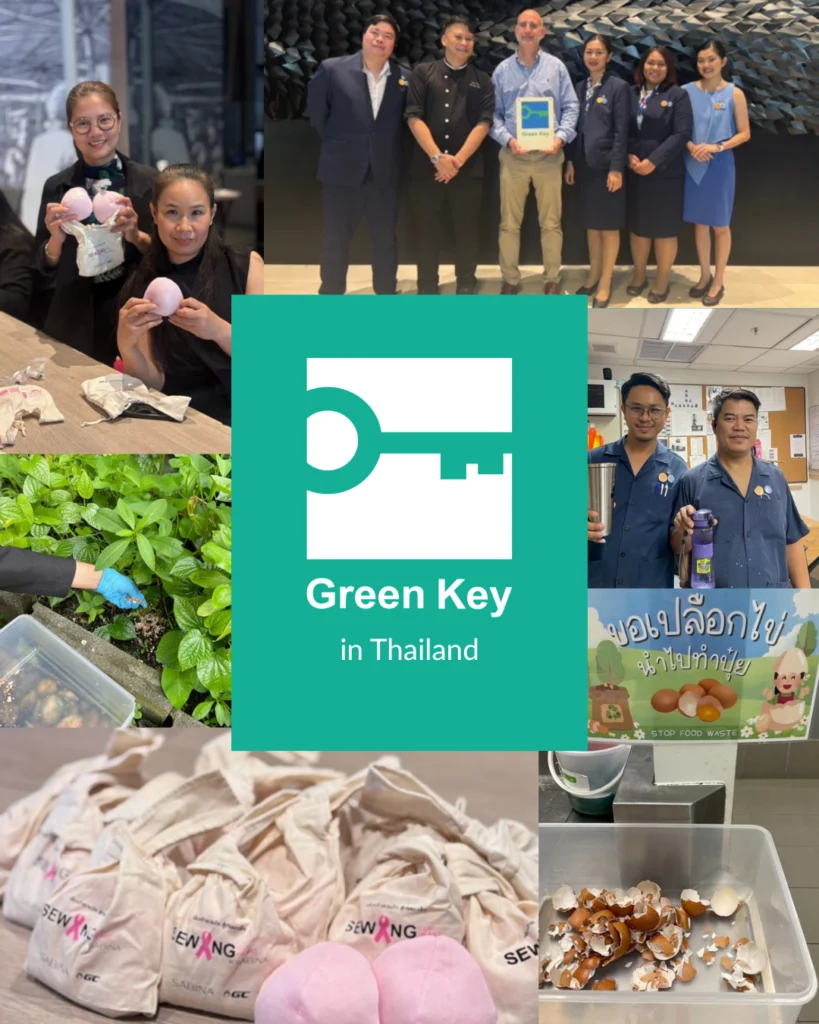
Good practices of Green Key hotels in Thailand

In the heart of Thailand’s bustling capital, four forward-thinking hotels—Mercure Bangkok Siam, ibis Bangkok Siam, Novotel Bangkok Sukhumvit 4 and  ibis Styles Bangkok Sukhumvit 4—are setting powerful examples of sustainability in the hospitality industry. By embedding Green Key principles across all operational levels, these hotels demonstrate that environmental responsibility, operational efficiency, and guest satisfaction can go hand-in-hand.  Green Committees: The Engine Behind Sustainability  At both Mercure Bangkok Siam and ibis Bangkok Siam, the drive toward Green Key certification began with the formation of dedicated Green Committees. These cross-departmental teams, led by the General Managers, were designed to ensure clear accountability and foster a culture of sustainability from the top down.  Each committee crafted a comprehensive sustainability action plan, aligning with international Green Key criteria and tailored to their specific operational context. From energy and water conservation to waste reduction and staff engagement, no department was left behind. Frequent training sessions, town hall meetings, and real-time communication via the LINE platform reinforced knowledge and motivation, making sustainability a shared mission.  Efficiency Through Innovation  All three hotels implemented targeted technical improvements to reduce environmental impact:  Innovative Food Waste Management  In both Mercure and ibis Bangkok Siam, reducing food waste became a standout initiative. Each hotel introduced “Second Life” dishes to creatively repurpose surplus ingredients. Guests enjoyed fresh options like fruit salads, bread puddings, and healthy drinks—all prepared from otherwise wasted items.  Food waste was monitored monthly, with tracking tools enabling kitchen staff to adjust preparation volumes and recipes. These efforts led to a 15% reduction in food waste and approximately 80 kg of tracked waste per month—a substantial achievement in urban hospitality operations.  Guest Engagement and Communication  Guest involvement was crucial to the success of these initiatives. Rather than imposing rules, hotels chose to educate and inspire:  Overcoming Challenges with Leadership and Teamwork  Transitioning to a fully integrated sustainability model wasn’t without its challenges. The hotels initially faced staff skepticism, resource limitations, and coordination barriers. However, each obstacle was transformed into an opportunity through proactive solutions:  Empowering the Community and Beyond  At Novotel ibis Styles Bangkok Sukhumvit 4 and Novotel Bangkok Sukhumvit 4, sustainability extends beyond hotel walls. Their community-focused CSR programmes include:  A Roadmap for Others  The successes of Mercure Bangkok Siam, ibis Bangkok Siam, Novotel Bangkok Sukhumvit 4 and Ibis Styles Bangkok Sukhumvit 4 show what is possible when strategic leadership, empowered staff, and community engagement come together in pursuit of sustainability.  Their experience provides a scalable model for other hotels seeking Green Key certification—proving that meaningful environmental change is achievable, even in fast-paced, urban hospitality environments. 

Good practices of Green Key hotels in Thailand Read More »