Tools & Resources
- Green Key Toolbox
- Intro Sessions
- Carbon Calculation Tool
- Water Calculation Tool
- Waste Measurement Methodology
- Good Practices
- Online Training Platform
Green Key Toolbox
Join our programme and get access to Green Key Toolbox — helpful tips, templates, and best practice examples that will help you receive Green Key certificate and improve your environmental performance even further. The toolbox is divided into 13 thematic topics that match Green Key criteria categories.
Intro Sessions
Green Key International hosts quarterly intro sessions giving a short introduction to Green Key programme: criteria, certification process, participation costs, support tools, benefits, how to get started, and contact information.
What to Expect
- Overview of Green Key criteria and certification process
- Participation costs and available support tools
- The benefits of joining Green Key community
- Guidance on how to get started
- Q&A — bring your questions!
Next Intro Session
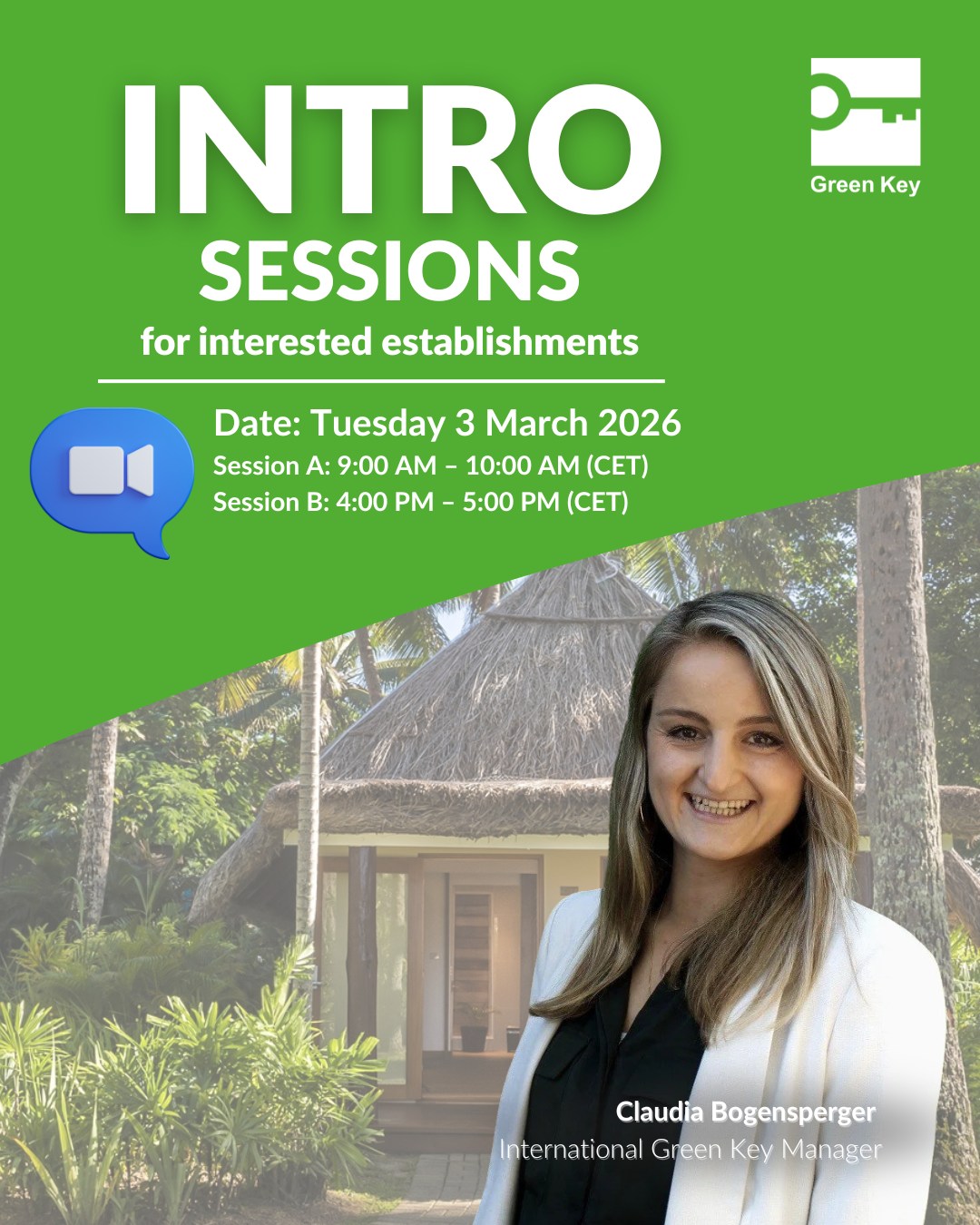
Tuesday 3 March 2026
- Session A: 9:00 AM – 10:00 AM (CET) Register →
- Session B: 4:00 PM – 5:00 PM (CET) Register →
Past Intro Sessions
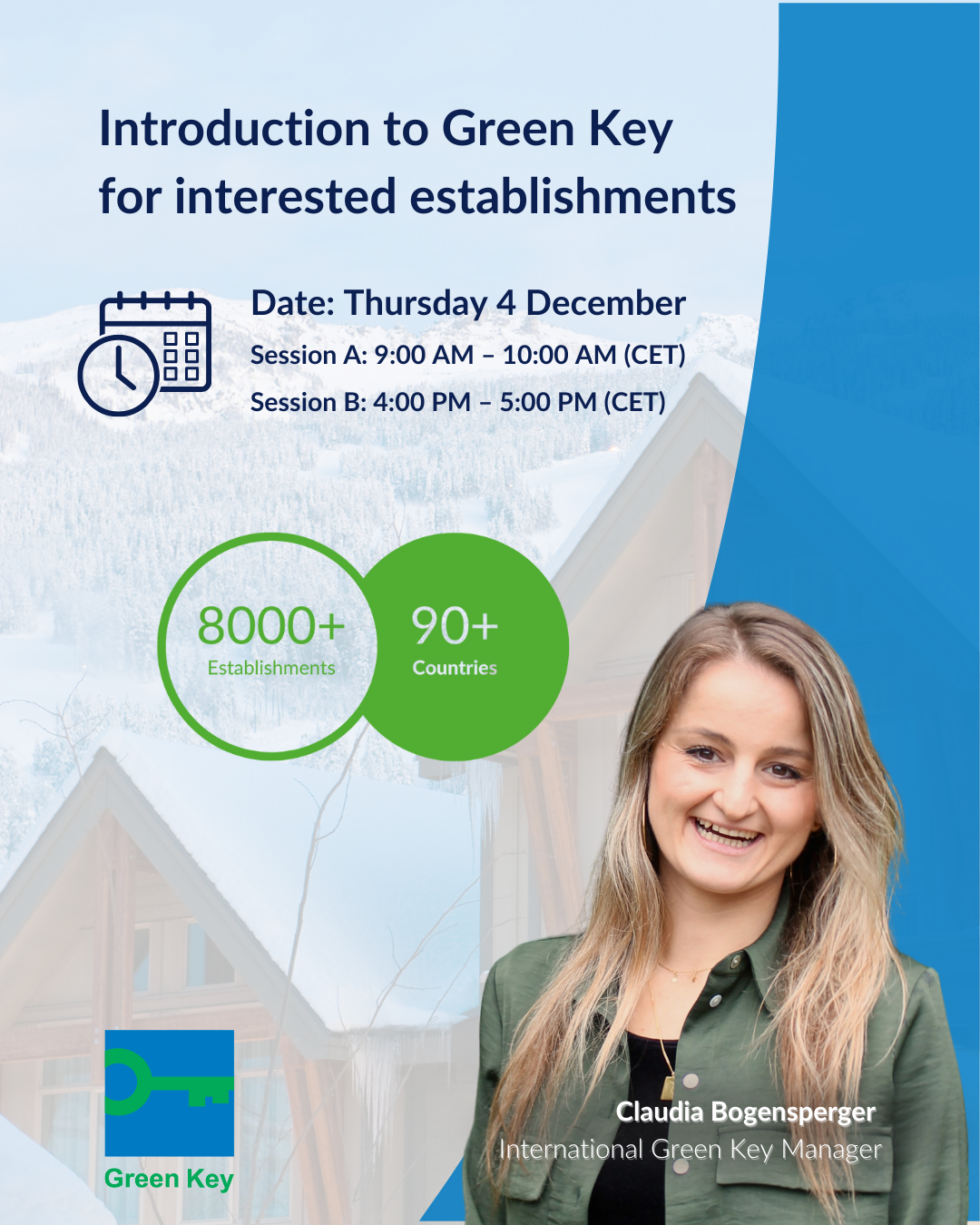
Thursday 4 December 2025
- Session A: 9:00 AM – 10:00 AM (CET)
- Session B: 4:00 PM – 5:00 PM (CET)
Watch the recording below:
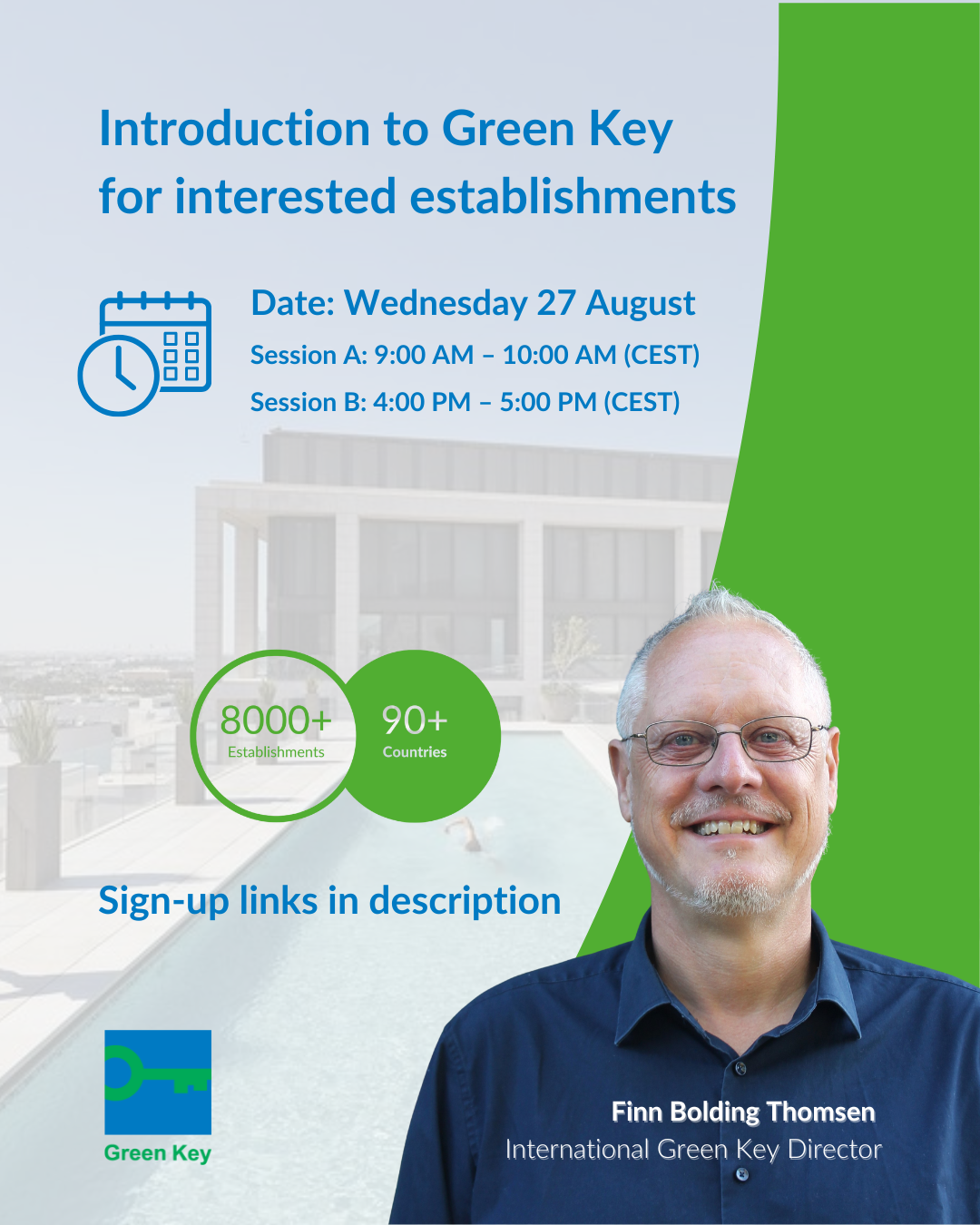
Wednesday 27 August 2025
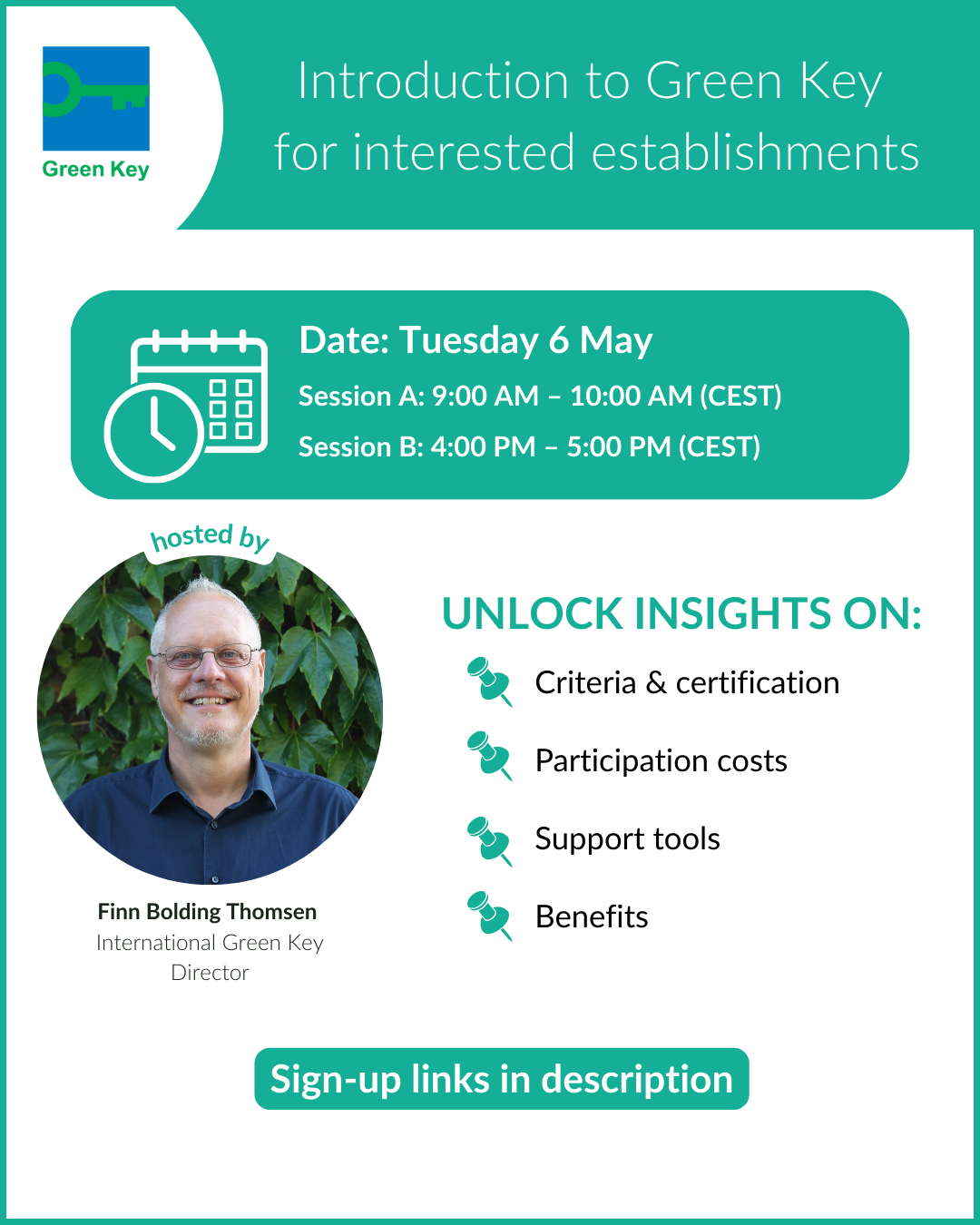
Tuesday 6 May 2025
Carbon Calculation Tool
If you are a hotel or other type of accommodation, you can calculate your carbon footprint using the Hotel Carbon Measurement Initiative (HCMI) tool developed by the World Sustainable Hospitality Alliance, in partnership with WTTC.
Access the HCMI Digital Version, Free of Charge
BeCause, sustainability data hub, has digitized the HCMI methodology. Register for free on BeCause, and calculate your carbon footprint with this user-friendly version.
Gather Your Information
In order for your accommodation to calculate the carbon footprint, you will need the following information ready:
- Total area of the accommodation (m²)
- Total area of guest rooms and corridors (m²)
- Total area of meeting facility space (m²)
- Total area of private or outsourced space inside the accommodation (m²)
- Total number of guest rooms
- Total number of occupied rooms for the reporting year
- Total electricity consumption for the reporting year (kWh)
- Total gas consumption for the reporting year (kWh) — gas measured in cubic meters should be converted to kWh
- Total oil consumption for the reporting year (litres)
- Total consumption of any other fuels (district heating, propane, LPG, coal, etc.)
- If using renewable energy: total renewable energy purchased or generated (kWh)
- If owning/operating vehicles: percentage of mobile fuel emissions or fuel amounts (litres)
- If laundry is outsourced: laundry tonnage or share of energy consumption from contractor
- If using air-conditioning/refrigeration: any gas leaks over 100 kg during the reporting year
- If using air-conditioning/refrigeration: any major maintenance during the reporting year
- If using refrigerant units: type of gas used and consumption (kg)
Track Your Impact
The calculation will give you the following data:
- Total carbon emission for the reporting period (tCO2e)
- Total meetings carbon footprint
- Carbon emission per occupied room on a daily basis (kg)
- Carbon footprint per area of meeting space (1 sqm/sqft) on an hourly basis
- Carbon footprint per sqm/sqft on an annual basis
- Total renewable energy and electricity used by the hotel (kWh)
- Total renewable electricity used (% of total electricity use)
- Total renewable energy and electricity used (% of total energy consumption)
- Greenhouse Gas Scopes 1, 2, 3 (outsourced laundry)
Interested in Comparing Your Carbon Results?
WSHA, in cooperation with Greenview, has also developed the Cornell Hotel Sustainability Benchmarking Index, where you can compare your carbon footprint result with the average carbon footprint of your area.
The HCMI tool is developed by the Sustainable Hospitality Alliance — sustainablehospitalityalliance.org
The digital version of the HCMI tool is developed by BeCause — because.eco
Water Calculation Tool
If you are a hotel or other type of accommodation, you can calculate your water footprint using the Hotel Water Measurement Initiative (HWMI) tool developed by the World Sustainable Hospitality Alliance.
Access the HWMI Digital Version, Free of Charge
BeCause, sustainability data hub, has digitized the HWMI methodology. Register for free on BeCause, and calculate your water footprint with this user-friendly version.
Gather Your Information
In order for your accommodation to calculate the water footprint, you will need the following information ready:
- Total area of the accommodation (m²)
- Total area of guest rooms and corridors (m²)
- Total area of meeting facility space (m²)
- Total area of private or outsourced space inside the accommodation (m²) or their sub-metered consumption (litres)
- Total number of guest rooms
- Total number of occupied rooms for the reporting year
- Total water consumption from different water meters for the reporting year (litres)
- If laundry is outsourced: laundry tonnage for the reporting year (metric tonnes)
- If irrigation is used: weeks and area of irrigation (m²) or amount of unmetered water used (litres)
- Total number of toilets in your accommodation using unmetered water
Track Your Impact
The calculation will give you the following data:
- Total water usage for the reporting period (litres)
- Water usage per occupied room on a daily basis (litres)
- Water usage per area of meeting space on an hourly basis (litres)
The HWMI tool is developed by the Sustainable Hospitality Alliance — sustainablehospitalityalliance.org
The digital version of the HWMI tool is developed by BeCause — because.eco
Waste Measurement Methodology
If you are a hotel or other type of accommodation, you can collect waste data, measure, and report waste using the "Hotel Waste Measurement Methodology" (HWMM) developed jointly by WWF and Greenview, supported by leading hotel brands and the Sustainable Hospitality Alliance.
The methodology contains a series of steps to support the user to develop standard waste metrics, consistently measure and report waste weights (including food waste), and set waste goals to track progress.
Establishing the Boundaries of the Inventory
Before calculating waste, define the boundaries of the dataset to align the inventory with industry standards. There are five boundaries to consider:
- Temporal boundary — what timeframe the data will cover
- Organizational boundary — how much of the organisation's operations are included
- Waste boundary — what types of waste/food waste are included or excluded
- Waste destination boundary — what destinations are included/excluded from diversion
- Floor area boundary — what is included in the floor area calculation
Identifying Measurement Metrics
Common comparable metrics and additional metrics include:
- Total waste and food waste generated (metric tons)
- Total waste and food waste per square meter (kilograms)
- Waste and food waste diversion rate (%)
Data Collection and Extrapolation
Three stages to the data collection and extrapolation process:
- Collect primary data (property information, waste and diversion/destination data)
- Identify and fill data gaps to establish the "Base Data Boundary"
- Extrapolate for properties which do not fall within the "Base Data Boundary"
Verifying and Auditing Results
Best practices for verifying data and auditing results include:
- Physical audit and inspection of waste sources and weights on property
- Desktop audits of calculations, assumptions, boundaries, and source data
Reporting Inventory Results
This section outlines the inventory requirements for transparent, standardised waste and food waste reporting.
The HWMM is developed by World Wildlife Fund (WWF) and Greenview, supported by an industry working group from leading hotel brands and the Sustainable Hospitality Alliance.
Sharing Your Good Practice
We all wish a sustainable future for the hospitality industry, but each Green Key-certified establishment brings something unique to the network.
Have you developed a new, exciting sustainability practice or campaign? Submit your Good Practice and we will make sure it gets well-deserved attention.
The Story of Good Practices
The collection of Good Practices started in 2016, as a competition for Green Key network to encourage an exchange of innovative and easy-to-replicate ideas between certified establishments. After a positive reception, the format continued for two subsequent years.
To make the format more inclusive and share as many stories as possible, Green Key now collects Good Practices from sites all over the world and offers their good examples as an extra resource for any hospitality establishment that wishes to embrace sustainability.
The Latest Good Practices
Get inspired by some recent sustainable projects that our certified establishments have successfully executed:
Green Key in the Balearic Islands: Mondrian Ibiza and Hyde Ibiza commitment to sustainability

Good Practice: Reducing waste while celebrating local produce at Hafsrød Campsite
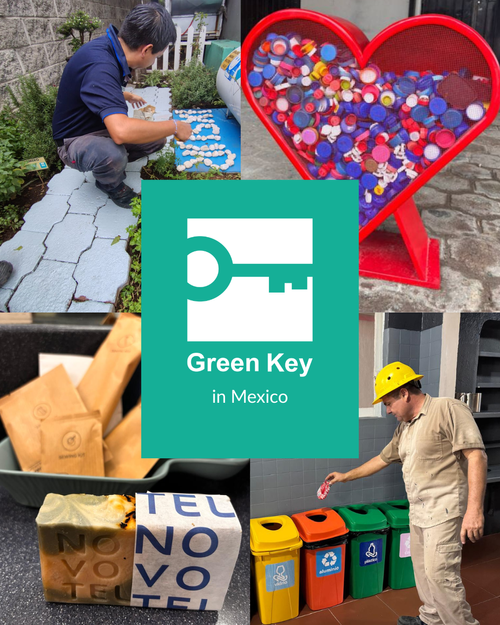
Mexico: Inspiring New Practices in Green Key Certified Hotels
Good Practice Competition (2016–2018)
Courses on FEE Academy
FEE Academy is our online learning platform designed to support global members, hotel managers, and site operators.
It provides tools and resources to successfully implement sustainability programmes, including Green Key.
Start Learning Sustainability
The following courses are designed especially for Green Key stakeholders. Create an account and start learning at your own pace.
Featured Courses
Explore key sustainability and hospitality courses: