
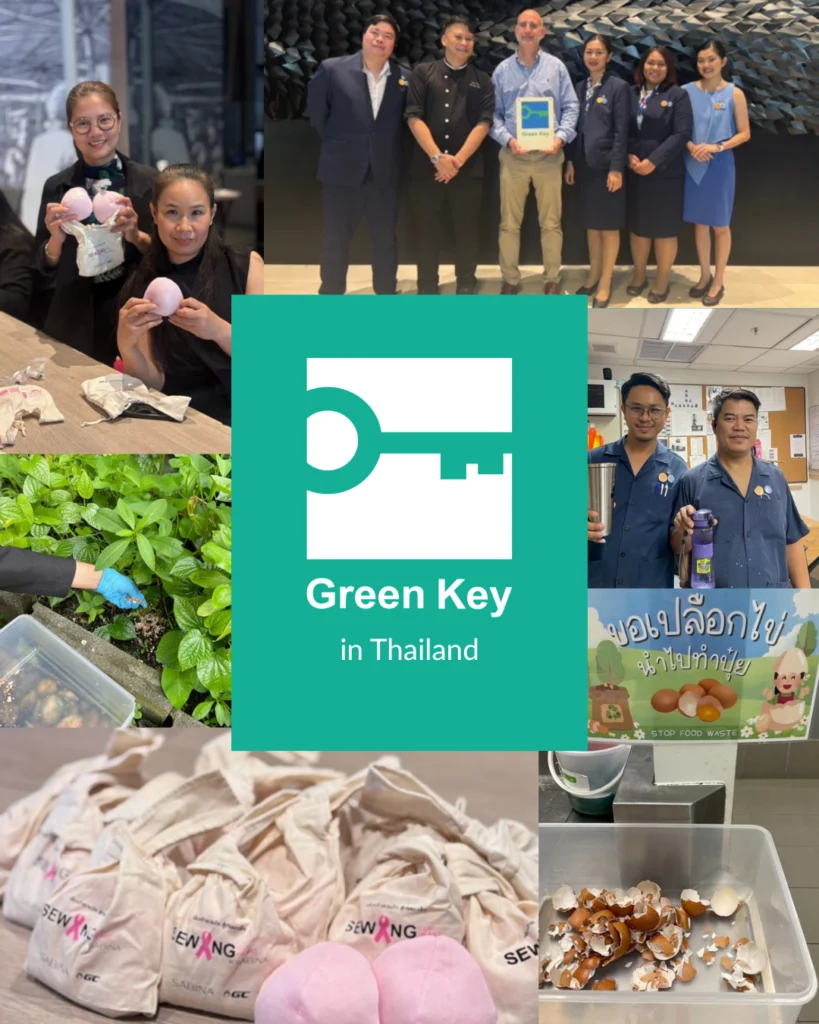
Good practices of Green Key hotels in Thailand
In the heart of Thailand’s bustling capital, four forward-thinking hotels—Mercure Bangkok Siam, ibis Bangkok Siam, Novotel Bangkok Sukhumvit 4 and ibis Styles Bangkok Sukhumvit 4—are setting powerful examples of sustainability in the hospitality industry. By embedding Green Key principles across all operational levels, these hotels demonstrate that environmental responsibility, operational efficiency, and guest satisfaction can go hand-in-hand. Green Committees: The Engine Behind Sustainability At both Mercure Bangkok Siam and ibis Bangkok Siam, the drive toward Green Key certification began with the formation of dedicated Green Committees. These cross-departmental teams, led by the General Managers, were designed to ensure clear accountability and foster a culture of sustainability from the top down. Each committee crafted a comprehensive sustainability action plan, aligning with international Green Key criteria and tailored to their specific operational context. From energy and water conservation to waste reduction and staff engagement, no department was left behind. Frequent training sessions, town hall meetings, and real-time communication via the LINE platform reinforced knowledge and motivation, making sustainability a shared mission. Efficiency Through Innovation All three hotels implemented targeted technical improvements to reduce environmental impact: Innovative Food Waste Management In both Mercure and ibis Bangkok Siam, reducing food waste became a standout initiative. Each hotel introduced “Second Life” dishes to creatively repurpose surplus ingredients. Guests enjoyed fresh options like fruit salads, bread puddings, and healthy drinks—all prepared from otherwise wasted items. Food waste was monitored monthly, with tracking tools enabling kitchen staff to adjust preparation volumes and recipes. These efforts led to a 15% reduction in food waste and approximately 80 kg of tracked waste per month—a substantial achievement in urban hospitality operations. Guest Engagement and Communication Guest involvement was crucial to the success of these initiatives. Rather than imposing rules, hotels chose to educate and inspire: Overcoming Challenges with Leadership and Teamwork Transitioning to a fully integrated sustainability model wasn’t without its challenges. The hotels initially faced staff skepticism, resource limitations, and coordination barriers. However, each obstacle was transformed into an opportunity through proactive solutions: Empowering the Community and Beyond At Novotel ibis Styles Bangkok Sukhumvit 4 and Novotel Bangkok Sukhumvit 4, sustainability extends beyond hotel walls. Their community-focused CSR programmes include: A Roadmap for Others The successes of Mercure Bangkok Siam, ibis Bangkok Siam, Novotel Bangkok Sukhumvit 4 and Ibis Styles Bangkok Sukhumvit 4 show what is possible when strategic leadership, empowered staff, and community engagement come together in pursuit of sustainability. Their experience provides a scalable model for other hotels seeking Green Key certification—proving that meaningful environmental change is achievable, even in fast-paced, urban hospitality environments.
Good practices of Green Key hotels in Thailand Read More »